Habitat and distribution.
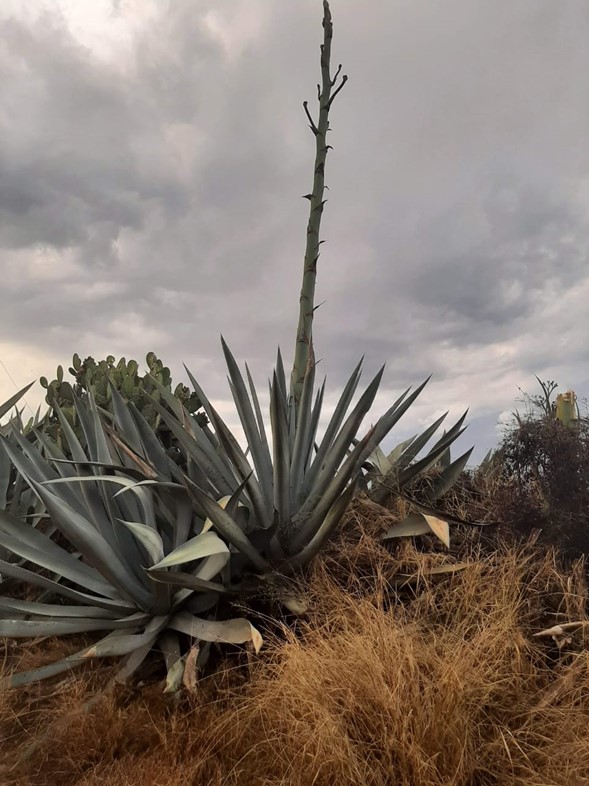
The best development of the species, Agave angustifolia Haw, occurs in open sites, with high light intensity, with deep to medium soils, with a slightly sandy-loamy texture, never clayey, dark-brown to whitish-calcareous in color, with quantities moderate organic matter. Its presence in dry places is common; however, in temperate climates, its distribution is limited to sites with intermediate humidity and very rarely to places with high humidity.
A. angustifolia Haw, also called ‘thin maguey’ or ‘sprat’, is the source of fiber and mezcal alcoholic beverages (Vázquez-García et al., 2007). This maguey is distributed mainly in Mexico, in the states of Aguascalientes, Campeche, Chiapas, Chihuahua, Durango, Guerrero, Jalisco, State of Mexico, Michoacán, Morelos, Nayarit, Oaxaca, Puebla, Quintana Roo, Tamaulipas, Veracruz, Yucatán and Zacatecas. from sea level to more than 2,000 meters above sea level (Vázquez-García et al., 2007).
Taxonomy.
It is characterized by its radially extended succulent rosette, with a 20 to 90 cm long stem; mature leaves generally 60 to 120 by 3.5 to 10 cm linear or lanceolate, rigid, fibrous, juicy, ascending to horizontal, pale green to glaucous grey, flat or concave above, convex below, narrow and thick towards the base , right margin wavy, sometimes cartilaginous; small teeth 2-5 mm long, with weak curved or varying to flexed tips; panicles 3-5 m tall, open, sometimes bulbiferous; the peduncles larger than the penicle. Bracts triangular, narrow and dry; umbel branches 10-20 cm; green to yellow flowers 50-65 mm long.
Description.
The largest volume of mezcal production in the country corresponds to the sprat maguey, due to its high reproduction properties, sugars, weight and volume. The reproduction process of the agaves occurs in two ways: by inflorescence and by shoots that are usually genetically homogeneous.
Crop plants are all the same age. The planting season begins in the months of May-August in the rainy season. Upon reaching maturity, from 8 to 12 years old, the plant accumulates energy in the form of sugar in its heart or pineapple and begins to develop an inflorescence called quiote, which is indicating its last stage of production. which is cut so that the sugars are concentrated. This process is called capado. It is given a period of one year for its use. At the beginning of the following production season, all the agaves called “capones” that were out of order a year before are used.
For its conservation, we select the agaves from our plantation with the best genetics that complete their life cycle and reach flowering and therefore develop seeds, thus leaving offspring. We are dedicated to the planting and cultivation of this noble species: espadin.
Bibliography.
Barrientos Rivera, G., Esparza Ibarra, E. L., Segura Pacheco, H. R., Talavera Mendoza, Ó., Sampedro Rosas, M. L., & Hernández Castro, E. (2019). Morphological characterization of Agave angustifolia and its conservation in Guerrero, México. Mexican journal of agricultural sciences, 10(3), 655-668.

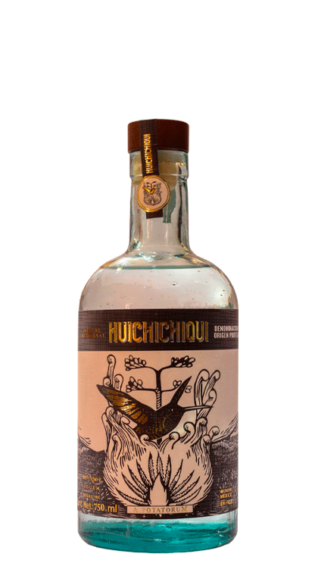
Agave potatorum ( Papalometl).
Habitat and distribution.
gave potatorum develops on flat or gently sloping sites, on sandy soils derived from limestone rocks, in an altitudinal range that goes from 1,300 to 2,400 m, in arid and semi-arid climates. It forms part of the low deciduous forest, the xeric scrub with columnar cacti and the xeric scrub with Quercus. Its distribution covers the eastern end of the Balsas River basin, the Tehuacán-Cuicatlán Valley, the foothills of the Mixtec sierras, and mountains that surround the Central Valleys of Oaxaca.
Taxonomy Agave potatorum.
Perennial, solitary, stemless, rarely with 1–3 stoloniferous suckers; rosettes compact, 30–50 cm tall, 40–60 cm diam. Leaves 30–60(400) per plant, 15–35 cm long, (5–)8–10 cm wide, ovate, oblong olanceolate, succulent, erect, flexible to rigid, flat or slightly concave towards the apex, thickened towards the tip. base, glaucous to green–glaucous; margin sinuate to crenate, nipples 4–7(–10) mm high; teeth on middle part, 4–6(–12) mm long, 4–6(–8) mm wide, retrorse, antrorse or straight, brown to greyish, 1–3cm apart; spine 3–4 cm long, 0.4–0.7 cm broad, straight or sinuous, acute, broadly ribbed to flat on upper surface, decurrent by less than 1 cm, brown to greyish. Inflorescence 3–5(–6) m tall, fertile portion in upper half or third, paniculate, open, with (7–)11–25 primary branches 10–30 cm long, 15–30cm apart, a sometimes with secondary branches 0.5–4 cm long; stalk green to reddish-brown, stalk bracts 12–20cm long, 3.5–4 cm broad at base, triangular, chartaceous, with a few small teeth on the margin, spine 0.5–2.5 cm long, 0.7–1 cm broad, brown –reddish; bracts of primary branches 5–8 cm long, 2–5 cm broad, ovate, amplexicaul. Flowers (15–)20–40 per umbel, (5–)5.5–7 cm long, bell-shaped to somewhat urceolate, succulent, yellowish-green with purplish or reddish tinges, ovary green; pedicels 1–1.5 cm long; ovary 2.5–3 cm long, 4–6 mm wide, cylindrical to slightly triquetrous, neck 2–3(–5) mm long, tube (1–)1.3–1.6 cm long, (0.8–)1.3–1.8 cm diameter at the distal portion, sulcate; tepals 1.2–1.5(–2) cm long, 3–6 mm wide, triangular or oblong, erect, thick, the outer ones 1–2 mm longer than the inner ones, involute margin, cuculate apex, hard, the inner ones keeled; filaments 3–4(–4.5) cm long, adaxially flattened, inserted in the upper half or third quarter of the tube, yellowish, sometimes with purplish tinges, anthers 1.5–2.5 cm long, 2–3 spotted, straight, versatile , yellowish; style 5.5–6 cm long, stigma clavate, three-lobed. Capsules (3.5–) 4–6cm long, 1.5–2 cm wide, oblong, stipitate, rostrate. Seeds 5–6 mm long, 4–5 mm broad, lunular, with a barely perceptible wing, flattened, black.
Description Etymology: The specific epithet comes from the Latin potator, -oris drinker (of wine).
Common name and uses: papalometl, papalomé, maguey, papalomé, tóbala, jä näk tsääjts (mixe) (Vásquez, 2006). It is mainly used for the production of mezcal, an alcoholic beverage highly appreciated for its soft organoleptic qualities. The flowers are used for food, as is the floral peduncle when it has begun to develop. In traditional medicine, the leaves are used to reduce swelling.
Agaves Unidos de Puebla We are aware that it is a wild agave that is of very scarce and limited production and for this reason we are committed to the conservation of this agave and we can say that we are dedicated to the development of our first plantations and thus avoid the disappearance of this species and maintain the sustainability of our production and provide diversity in our mezcales in a sustainable way.
Bibliography.
García-Mendoza, A. J. (2010). Taxonomic revision of the Agave potatorum complex Zucc.(Agavaceae): new taxa and neotipificación. Mexican Botanical Act, (91), 71-93.

Agave Americana L.
Habitat and distribution.
The genus Agave L. is distributed between 5° and 25° N, with a temperate, semi-warm or warm thermal regime and an average temperature of between 20 °C and 22 °C (Ruiz et al., 1999). It adapts to semi-arid and sub-humid regions with an annual rainfall regime between 600 mm to 1800 mm, with dry to moderately dry environments most of the year (Ruiz et al., 1999). Its distribution covers the state of Oaxaca and the area where the Tehuacán Valley and the eastern end of the Balsas Basin join.
Taxonomy
It belongs to the Americanae group proposed by Gentry (1982) and is recognized for having rosettes up to two meters high, 2.5-3.0 m in diameter, leaves 1.5-2.0 m long, 15-25 cm wide, lanceolate, slightly spatulate, erect and occasionally slightly curved, grooved on the upper surface, glaucous, and with a slightly rough surface and wavy to crenate margin; teeth on nipples, in the middle part, 0.5-1.0 cm long, 0.6-1.2 cm wide, straight or recurved; terminal spine 3.5-4.0 cm long. Inflorescence paniculate, lax, 6-9 m tall, general outline oval, fertile from the middle or upper third, primary branches 20-35, 1-1.2 m long; glaucous-green peduncle, peduncle bracts 30-60 cm long, base up to 10 cm wide, triangular, cactaceous, margin entire, spine 1-1.5 mm long. Flowers 6-7.5 cm long, hipocrate-riform, yellowish-green; tepals 2.5-3.5 cm long, oblong, thick, perigonium tube 1-1.5 cm long, ovary 2.5-3 cm long, neck 2-5 mm; stamens with filaments 5.5-8.0 cm long, inserted in the middle part of the tube. Capsules 4.0-5.5 cm long, 2.0-2.5 cm wide; seeds 9-10 mm long, 7-8 mm wide, black.
Description.
American agave
A cultivated species, in some regions they occupy it as a living fence, because it is one of the longest-lived: from 12 to 15 years of age. Its leaves are straight, grooved and whitish. With intense aromas, but soft on the palate, it is one of the mezcals with the greatest flavor and distinction, since in it notes of fresh herbs, cooked agave, ocote and cinnamon are perceived.
The horticultural variety of Agave americana, known as “maguey arroqueño”, is used for the production of mezcal (Espinosa et al., 2002).
Agaves Unidos de Puebla We are aware that it is a wild agave that is of very scarce and limited production and for this reason we are committed to the conservation of this agave and we can say that we are dedicated to the development of our first plantations and thus avoid the disappearance of this species and maintain the sustainability of our production and provide diversity in our mezcales in a sustainable way.
Bibliography.
R. Reynoso-Santos, Taxonomic identification of agaves (Agave ssp.) used for the elaboration of comiteco liquor in Chiapas, México , Agro Productivity: Vol. 5 Núm. 4 (2012): July August
R. Reynoso-Santos, POTENTIAL AREAS FOR AGAVE GROWING (Agave americana L.) EN LA MESETA COMITECA, CHIAPAS , Agro Productivity: Vol. 9 Núm. 2 (2016): FEBRERO
https://mezcologia.mx/agaves-mezcaleros-de-oaxaca/